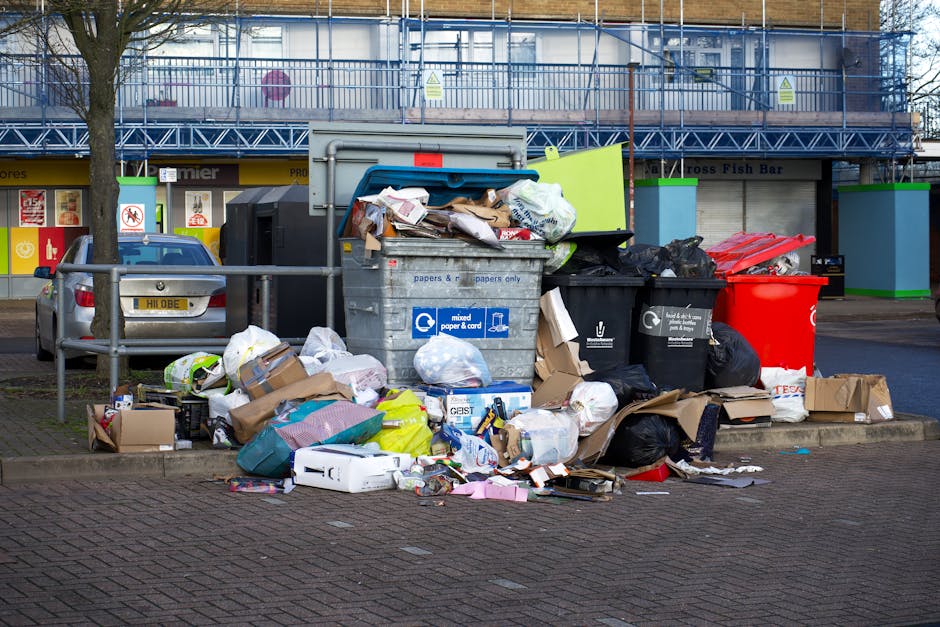
Insider tips for booking rubbish removal in Barking estates
Booking rubbish removal in Barking estates sounds simple until you're standing in a stairwell with a sofa, a broken wardrobe, and a bin store that's already full. Then the small details start to matter: access, timing, price, what the crew can actually take, and whether the job will be done quietly enough not to annoy the neighbours. If you want a smoother experience, the insider tips for booking rubbish removal in Barking estates below will help you plan properly, avoid awkward surprises, and choose the right service first time.
In our experience, the difference between a stress-free collection and a messy one is rarely the waste itself. It's the prep. A good booking approach saves time, reduces back-and-forth, and helps you get clearer quotes. It also makes life easier if you're dealing with a flat, maisonette, managed block, or busy estate with tighter access and shared spaces. Let's get into the practical stuff.
Why Insider tips for booking rubbish removal in Barking estates Matters
Estates are different from ordinary street-level pickups. You may have shared entrances, limited parking, lift access, narrow corridors, timed loading bays, or management rules around moving large items. That changes everything. A collection that looks straightforward on paper can become awkward if the crew can't park nearby, if bulky waste needs to be carried down several floors, or if the estate office expects advance notice.
That's why insider knowledge helps. You're not just booking "waste removal"; you're booking a mini logistics job. The better you describe the site, the more accurate the quote tends to be. The fewer assumptions everyone makes, the less chance of delays. Fairly simple, but easy to miss when you're rushing.
There's also a money angle. Estate jobs can be priced differently depending on access, weight, labour, and the type of waste. A clear booking reduces the risk of overpaying for a crew that arrives underprepared or charges extra because they had to make repeated trips to a van parked half a road away. Nobody wants that sort of afternoon.
And then there's neighbourly common sense. On estates, noise and disruption travel quickly. One noisy lift hold-up and suddenly everyone knows your business. Booking well helps keep the job tidy, quick, and discreet.
How Insider tips for booking rubbish removal in Barking estates Works
The process is usually straightforward: you describe the rubbish, share access details, agree a price or estimate, then book a collection time. But the quality of the booking depends on the quality of the information you give. That's the real trick.
A solid booking usually covers:
- what needs removing
- rough quantity or volume
- where the items are located, such as a flat, garage, bin store, loft, or communal area
- access issues, including stairs, lifts, gated entries, and parking
- any fragile, heavy, or awkward items
- whether the waste includes special items like appliances, mattresses, or potentially hazardous materials
- your preferred collection window
In Barking estates, access details matter almost as much as the rubbish itself. If a service knows in advance that the lift is small, the loading bay is restricted, or the waste is in a sixth-floor flat, they can send the right team and allow enough time. That's what makes the difference between "sorted by lunch" and "we'll have to come back tomorrow."
If your waste includes furniture or mixed household items, it can also help to check related services such as furniture clearance or mattress and sofa disposal. If the job is broader than a single item, a more general waste removal service may be the better fit.
Key Benefits and Practical Advantages
When you book rubbish removal properly, the gains are very practical. No big drama, just fewer headaches.
- Faster collections: the crew arrives with a realistic plan, so they can get on with the job.
- Clearer pricing: good detail upfront helps avoid vague estimates and unwelcome extras.
- Less disruption: on estates, a calm and tidy collection is worth its weight in gold.
- Better suitability: the right team, vehicle, and time slot for your access conditions.
- Reduced risk: fewer issues with damaging walls, lifts, or communal areas.
- More responsible disposal: you can ask how reusable or recyclable items are handled.
For many residents, the biggest benefit is simplicity. One call, one pickup, one clear space again. That "finally, it's gone" feeling is a small joy, but a real one. Especially if the pile has been staring at you from the hallway for three weeks.
If sustainability matters to you, it's sensible to ask about recycling routes and reuse wherever possible. You can also look at the company's recycling and sustainability approach before you book. It's a good sign when a provider can explain that clearly, without sounding vague or defensive.
Who This Is For and When It Makes Sense
This kind of booking guidance is useful for almost anyone living or working on an estate in Barking, but it's especially helpful in a few common situations.
- Flat residents clearing bulky household waste, old furniture, or loft clutter
- Landlords and letting agents arranging end-of-tenancy clearances
- Homeowners dealing with garden waste, garage clutter, or post-refurb leftovers
- Small businesses needing discreet removal from office or storage areas
- Contractors and tradespeople looking for tidy builders' waste clearance
It also makes sense when the waste is too much for your car, too awkward for the lift, or too time-consuming to tackle yourself. Truth be told, a lot of people start out thinking they can do it all in a weekend. Then the bags split, the van hire turns into a hassle, and suddenly the estate's shared bin area looks like a bad comedy scene.
If you're dealing with a larger home clear-out, home clearance or house clearance can be more appropriate than booking item-by-item removal. If it's a flat with restricted access, flat clearance is often the better framing for the job.
Step-by-Step Guidance
Here's the practical booking process that tends to work best in Barking estates. Keep it simple, but be specific. That's the trick.
- List everything you want removed. Split it into furniture, general rubbish, garden waste, appliances, builders' debris, or mixed items.
- Photograph the waste. A few clear pictures usually help more than a long message. Show the volume, not just the top layer.
- Note the access route. Mention stairs, lift size, concierge rules, gated entry, parking limitations, and the floor number.
- Flag awkward items early. Sofas, mattresses, fridges, wardrobes, and broken cabinets can change labour needs.
- Ask what's excluded. Hazardous materials, confidential documents, and certain electricals often need separate handling.
- Request a clear quote structure. Ask whether pricing is based on volume, weight, labour, or a mixture of these.
- Confirm the collection window. On estates, tight time slots work better than vague "morning-ish" arrangements.
- Prepare the area. Move items to a sensible spot if you can, while keeping access safe and clear.
- Check payment and proof options. Make sure you know how payment works and whether the provider offers confirmation of completion.
If your load includes appliances, it's worth checking a specialist option like fridge and appliance removal. If you have office-related waste or paperwork, confidential shredding can be the safer route for documents that shouldn't just go out with the rest.
One small but useful habit: keep your phone nearby on collection day. If the crew can't get through a gate code or needs a quick clarification, five minutes of delay can save twenty. It sounds obvious. Yet people forget all the time.
Expert Tips for Better Results
These are the little details that experienced bookers tend to get right. Nothing glamorous, just useful.
- Measure the awkward bits. A wardrobe may fit the van, but not the stairwell turn. That matters.
- Be honest about volume. Understating the job can lead to quote changes or a second trip. Best not to play guessing games.
- Bundle similar items together. Mixed loads are fine, but grouping helps the crew plan faster.
- Book around estate rules. Some blocks have quiet hours or parking restrictions. Use them.
- Ask about recycling first. Reusable furniture, timber, metal, and certain appliances may be handled differently from general rubbish.
- Keep routes clear. On collection day, even a hallway shoe rack can become an annoying obstacle. Small things trip people up.
When a job is more construction-related, a dedicated builders' waste clearance service may suit you better. For outdoor jobs, such as hedge trimmings and soil sacks, garden clearance can be a cleaner match than general rubbish removal.
Also, ask directly how waste is sorted after collection. You do not need a lecture, just a straight answer. A provider that can explain the process clearly usually feels more trustworthy. If they dodge the question, that's telling too.
Common Mistakes to Avoid
Most problems come from the same handful of avoidable mistakes. Not fancy mistakes. Everyday ones.
- Booking without access details: if the crew doesn't know about the lift or parking limits, the job can slow down immediately.
- Forgetting special waste: appliances, paint, chemicals, and other risky items may need separate handling.
- Mixing everything into one vague description: "just junk" is not enough for a good quote.
- Leaving everything until the last minute: last-minute estate jobs often cost more or limit availability.
- Assuming every provider works the same way: some are better with bulky items, others with commercial loads, and some are simply not set up for tight access.
- Ignoring the neighbours: dragging bags through a shared corridor at 7 a.m. is not ideal, to put it mildly.
Another common one: people compare only the headline price. Then they discover that parking, labour, or access wasn't included. That's where the "cheap" quote gets a bit expensive. Happens all the time, honestly.
If you're unsure what can legally or safely go into a mixed load, review the guidance on what can go in a skip. Even if you're not hiring a skip, the categories are still helpful for understanding what belongs in a standard waste load and what doesn't.
Tools, Resources and Recommendations
You do not need a truckload of tools to book rubbish removal well. A few simple things help a lot.
- Phone camera: take clear photos from a couple of angles, ideally with a familiar object for scale.
- Notes app: keep a quick list of items, access codes, and collection instructions.
- Tape measure: useful for bulky items, tight hallways, and lift dimensions.
- Estate handbook or management notes: check parking, loading, and shared-area rules before you book.
- Payment confirmation: save booking details so everyone knows the agreed scope.
From a service perspective, it helps to review the provider's information pages before you commit. For example, if you want to understand how quotes are built, take a look at pricing and quotes. If payment security matters to you, payment and security is worth checking as well.
It can also be useful to understand the company behind the service. The about us page often gives a better feel for how they work, while the main website can help you compare different clearance options in one place.
Law, Compliance, Standards, or Best Practice
Waste bookings are not just a practical issue; they also touch on duty of care, safety, and responsible disposal. You do not need to become a compliance expert, but it helps to know the basic expectations.
In the UK, waste should be handled by a responsible carrier, and you should be careful with anything potentially hazardous or difficult to dispose of safely. If you're clearing a flat, office, garage, or estate storage area, it's wise to ask how items will be transferred and processed. That includes electrical items, mattresses, confidential papers, and anything potentially harmful.
Best practice usually means:
- giving an accurate description of the waste
- separating hazardous items when required
- keeping access routes safe for workers and residents
- checking whether the provider is insured and safety-conscious
- retaining booking and payment details for your records
For higher-risk items, review specialist pages such as hazardous waste disposal and insurance and safety. If you're arranging waste for a business premise, business waste removal is a sensible place to start, because commercial loads often need clearer planning than household clear-outs.
There is also a plain common-sense standard here: if an item is awkward, dangerous, or likely to damage communal property, tell the provider early. That's not overthinking it. That's just good booking.
Options, Methods, or Comparison Table
There are a few ways people handle rubbish on Barking estates. The right choice depends on volume, urgency, access, and what kind of waste you have.
| Option | Best for | Strengths | Trade-offs |
|---|---|---|---|
| Booked rubbish removal | Mixed loads, bulky items, fast clearances | Convenient, labour included, usually very quick | Access details matter; price can vary by load size |
| Skip hire | Longer projects, repeated loading, DIY work | Good for ongoing waste, can suit larger jobs | Space and permit considerations; not ideal for tight estates |
| Self-haul to a facility | Small amounts and flexible schedules | Can be low cost if you already have transport | Time-consuming, physically demanding, not great for bulky items |
| Specialist clearance service | Furniture, lofts, garages, office waste, appliances | Targeted handling for specific item types | May need more than one service if the load is mixed |
If your waste is mostly one type of item, a specialist page such as loft clearance, garage clearance, or office clearance may be a better fit than a general collection. For furniture-heavy jobs, furniture disposal can also be a good match.
A small but useful rule: if you're not sure whether the job is "one-off rubbish" or "proper clearance," choose the option that gives you more labour support. On estates, carrying is often the real bottleneck.
Case Study or Real-World Example
Here's a realistic example. A resident on a Barking estate had a hallway stack of old furniture, a dismantled bed frame, two bags of mixed household waste, and a fridge in the kitchen. Nothing unusual, but the access was the catch: fourth floor, small lift, and a managed loading area with a tight morning window.
Instead of booking it vaguely as "some rubbish," the resident sent photos, listed every item, and explained the lift size and parking restrictions. They also asked in advance about appliance handling. The result was a far smoother collection because the crew could plan for a heavier carry, bring the right kit, and avoid wasting time on-site. No drama. No second trip. Just done.
What made it work was not luck. It was detail. The resident also checked the company's service information before booking and made sure the job matched the right clearance type rather than assuming one generic solution would fit everything.
Expert takeaway: the more your booking sounds like a site briefing rather than a guess, the better your result will usually be. Small detail, big difference.
Practical Checklist
Use this before you hit confirm. It takes a couple of minutes and can save a lot of faff later.
- Have I listed every item clearly?
- Have I sent photos from more than one angle?
- Have I mentioned stairs, lift access, parking, and estate rules?
- Have I flagged any heavy, fragile, or awkward items?
- Have I separated hazardous or specialist waste?
- Do I know how pricing is calculated?
- Have I checked what happens with reusable or recyclable items?
- Do I know the collection time and who to call if access changes?
- Have I reviewed payment details and booking confirmation?
- Is the booking matched to the right service type?
That's the kind of checklist that seems almost too basic until you skip one item and regret it. Then suddenly it feels very clever indeed.
Get a free quote today and see how much you can save.
Conclusion
Booking rubbish removal in Barking estates is easier when you treat it like a small logistics job, not just a quick favour. Give accurate details, think about access, ask direct questions, and choose the right service for the waste you actually have. That approach keeps the process quicker, calmer, and usually better value too.
If you're clearing bulky items, mixed household waste, an overfull garage, or a flat that's gotten away from you a bit, the right planning makes the whole thing feel manageable again. And that's the real goal, isn't it? Less stress, less clutter, and a bit more breathing room at the end of the day.
For many people, the best part is not the booking itself. It's walking back into a clear space afterwards and thinking, well, that's one thing off the list.
Frequently Asked Questions
How far in advance should I book rubbish removal in Barking estates?
As early as you can, especially if your estate has parking rules, concierge access, or limited time windows. For urgent jobs, same-day or next-day may still be possible, but advance booking usually gives you more flexibility and a better chance of a smooth collection.
What information should I give when getting a quote?
Give a clear description of the items, how much there is, where it is located, and what the access is like. Photos help a lot. Mention stairs, lifts, parking restrictions, and anything awkward or unusually heavy, because that can affect labour and timing.
Can I book rubbish removal for a flat on an estate?
Yes, absolutely. In fact, flat collections are very common. Just be upfront about floor level, lift access, and whether the waste is already at the entrance or still inside the property. That detail makes a big difference.
Is rubbish removal better than hiring a skip on an estate?
Often, yes, if you have bulky items, limited space, or restricted access. A skip can work well for larger ongoing projects, but on estates the parking and placement issues can be a headache. Booked removal is usually simpler for one-off clearances.
What items need special handling?
Appliances, mattresses, sofas, confidential documents, and anything potentially hazardous should be flagged early. Some items may need specialist handling or separate disposal, so it's better to mention them before the crew arrives.
How can I avoid extra charges?
Be accurate with your description, send photos, and explain access properly. Extra charges often happen when the original booking didn't reflect the real job. It sounds obvious, but the details are where most surprises live.
Do I need permission from the estate management first?
Sometimes, yes. If there are rules about vehicles, loading bays, or use of shared areas, it is sensible to check with management before the collection. That avoids awkward conversations on the day and keeps everything moving more smoothly.
What if I have mixed household and garden waste?
That's usually fine, but tell the provider what you have so they can plan for sorting and loading. Mixed waste can affect the best service type, especially if the load includes soil, cuttings, furniture, or bagged household rubbish.
Can rubbish removal companies take furniture and appliances together?
Often they can, but it depends on the provider and the items involved. For example, a sofa and a fridge may be handled differently, so it helps to check both furniture-related and appliance-related services before you book.
How do I know if a service is trustworthy?
Look for clear pricing, straightforward explanations, safety information, and practical service details. Pages such as health and safety policy and complaints procedure can tell you a lot about how a company works when things do not go perfectly, which, let's face it, is a useful thing to know.
What should I do on collection day?
Keep your phone handy, make sure access is clear, and let the crew know about any last-minute changes. If possible, have the waste grouped together and ready to go. A calm ten-minute preparation can save a messy half hour later.
Where can I learn more before booking?
Start with the company's service and pricing pages, then check related clearance options if your job is more specific than standard rubbish removal. If you're still unsure, the safest move is to ask for a quote based on photos and a full description of the access.